Meal Planning
10 Best Smoothies for Weight Loss (High Protein, Low Sugar)
By NoxFit Team · 7 min read · Jul 2026
Most "weight loss smoothies" online are calorie bombs disguised as health food — 600+ calories, 50g sugar, and barely any protein. These 10 are different: all under 350 calories, 25g+ protein, and built around ingredients that actually reduce hunger rather than spike it.
Do Smoothies Actually Help Weight Loss?
Smoothies can help or hurt weight loss depending entirely on what's in them. The research is clear: liquid calories are generally less satiating than solid food calories — meaning a 400-calorie smoothie leaves you hungrier than a 400-calorie meal. The solution is making smoothies high in protein and fibre, which partially compensates for the satiety gap.
Smoothies work best for weight loss when used as a structured meal replacement with adequate protein (25g+), not as an add-on to existing meals. If you drink a smoothie and then eat a full breakfast anyway, you've simply added 300–400 extra calories.
The protein rule: Any smoothie intended to replace a meal needs at least 25g protein to provide meaningful satiety. Below that threshold, you'll typically be hungry again within 90 minutes. Every recipe below hits this mark.
10 Weight Loss Smoothie Recipes
1. Classic Protein Green Smoothie
~300 kcal30g protein35g carbs5g fat
Ingredients: 1 scoop vanilla protein powder · 200ml unsweetened almond milk · 2 large handfuls spinach · 1 frozen banana · ½ tsp cinnamon · ice
The go-to weight loss smoothie. Spinach is virtually tasteless here but adds iron, magnesium, and folate. Frozen banana adds natural sweetness without added sugar. Cinnamon helps stabilise blood sugar.
2. Peanut Butter Banana Protein Shake
~340 kcal32g protein32g carbs10g fat
Ingredients: 1 scoop chocolate protein powder · 200ml oat milk (unsweetened) · 1 tbsp natural peanut butter · 1 frozen banana · ice
Tastes like a dessert but works as a meal. Peanut butter adds healthy fats that slow digestion and extend satiety. Use natural peanut butter (no added sugar/oil) to avoid hidden calories.
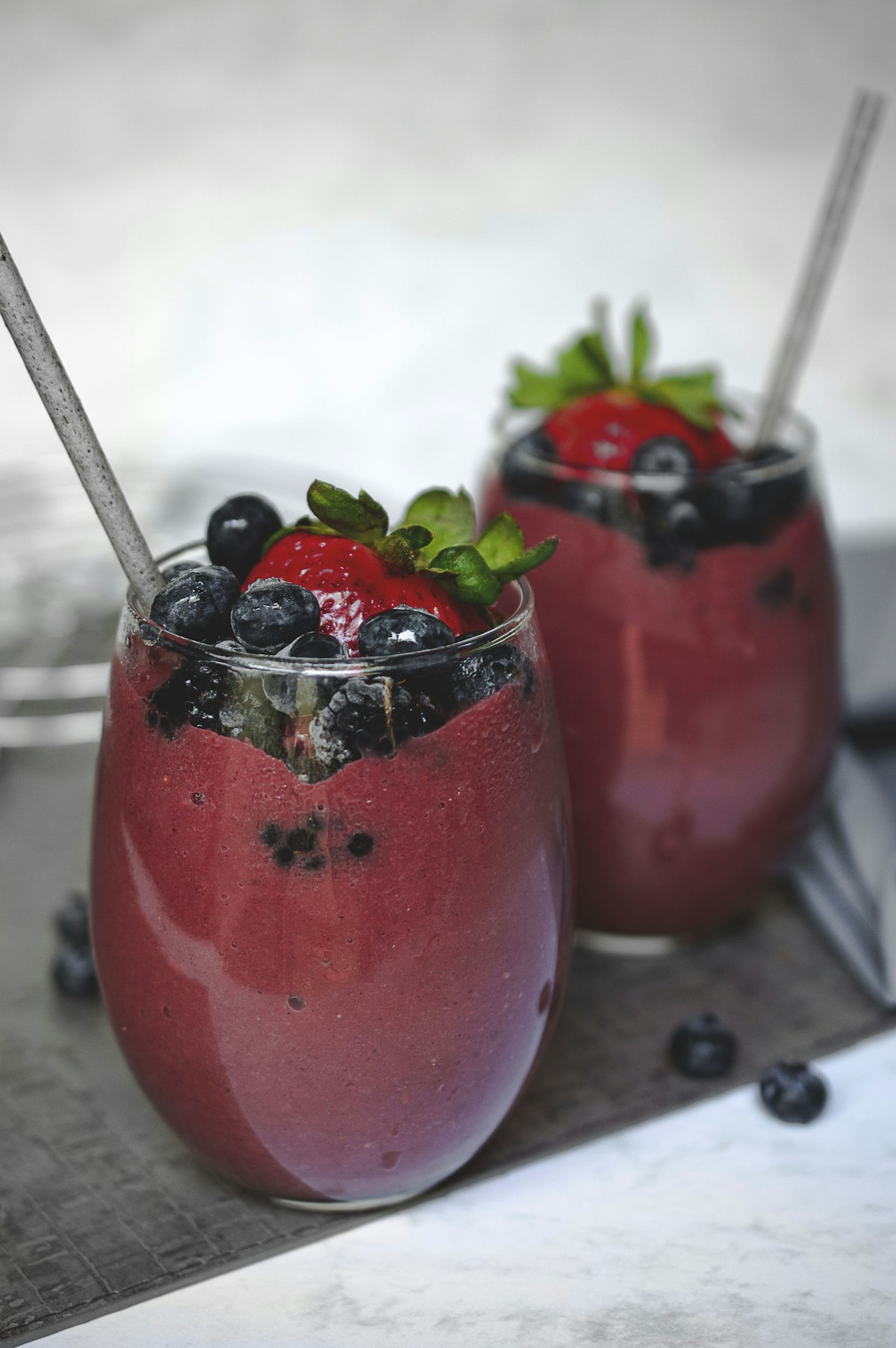
3. Berry Greek Yogurt Smoothie
~280 kcal28g protein38g carbs2g fat
Ingredients: 150g plain Greek yogurt (0%) · 100g frozen mixed berries · 100ml water · 1 tbsp chia seeds · small handful spinach · ice
No protein powder needed — Greek yogurt provides all the protein. Berries are among the lowest-sugar fruits and high in antioxidants. Chia seeds add 5g fibre and omega-3s that further reduce hunger.
4. Tropical Fat Burn Smoothie
~310 kcal27g protein40g carbs4g fat
Ingredients: 1 scoop vanilla protein powder · 150ml light coconut milk · 80g frozen mango · 80g frozen pineapple · 1 tsp turmeric · ½ tsp ginger · ice
Turmeric and ginger have anti-inflammatory properties that support fat metabolism and gut health. Mango and pineapple are higher in sugar than berries but still reasonable in these portions.
5. Chocolate Avocado Smoothie
~330 kcal26g protein25g carbs14g fat
Ingredients: 1 scoop chocolate protein powder · 200ml unsweetened almond milk · ½ avocado · 1 tbsp cacao powder · ice
Avocado creates an incredibly creamy texture without banana. The high monounsaturated fat content slows digestion significantly — this smoothie typically keeps people full for 3–4 hours. Cacao (not cocoa) is rich in flavanols with minimal added sugar.
6. Cottage Cheese Smoothie
~270 kcal35g protein28g carbs3g fat
Ingredients: 150g low-fat cottage cheese · 150ml water · 100g frozen strawberries · 1 frozen banana · ½ tsp vanilla extract · ice
Cottage cheese blends completely smooth and adds 25g of slow-digesting casein protein — the highest protein smoothie on this list. The casein content means sustained satiety for 4+ hours, making it ideal as a breakfast replacement.
7. Coffee Protein Smoothie
~290 kcal29g protein30g carbs5g fat
Ingredients: 1 scoop vanilla protein powder · 150ml cold brew coffee · 100ml oat milk · 1 frozen banana · 1 tsp almond butter · ice
Combines protein and caffeine for maximum morning effectiveness. Caffeine has a mild thermogenic effect and appetite-suppressing properties for 2–3 hours post-consumption. Cold brew is less acidic than regular coffee and works better in smoothies.
8. Kale and Ginger Detox Smoothie
~260 kcal26g protein30g carbs4g fat
Ingredients: 1 scoop unflavoured or vanilla protein · 200ml water · 2 large kale leaves (stems removed) · ½ green apple · ½ cucumber · juice of ½ lemon · 1 tsp fresh ginger · ice
Lower calorie than most on this list. Kale has more protein per calorie than most vegetables and is rich in vitamin K, C, and calcium. The lemon and ginger make this genuinely palatable — start with less ginger if you're not used to it.
9. Oat and Blueberry Protein Smoothie
~345 kcal28g protein45g carbs6g fat
Ingredients: 1 scoop vanilla protein · 200ml unsweetened almond milk · 30g rolled oats · 100g frozen blueberries · 1 tbsp flaxseed · ice
Rolled oats add beta-glucan fibre — the same compound that makes oatmeal one of the most satiating breakfast options. Blueberries are among the lowest glycaemic fruits. Good pre-workout option due to the complex carb content.
10. Watermelon Mint Protein Cooler
~250 kcal25g protein30g carbs2g fat
Ingredients: 1 scoop unflavoured protein · 200g frozen watermelon · juice of 1 lime · handful fresh mint · 100ml water · ice
The lowest calorie option. Watermelon is 92% water, making it extremely filling per calorie. This works especially well in summer as a post-workout recovery smoothie. The high water content supports hydration which independently aids fat loss.
5 Smoothie Mistakes That Cause Weight Gain
| Mistake | The Problem | The Fix |
|---|
| Adding fruit juice | 100–150 extra kcal, spikes blood sugar, no fibre | Use water, almond milk, or coconut water instead |
| Multiple full fruits | 2 bananas + mango + dates = 500+ kcal of sugar | Max 1 small fruit per smoothie |
| No protein source | Hungry again in 60–90 minutes | Always include protein powder, Greek yogurt, or cottage cheese |
| Store-bought "healthy" smoothies | Often 400–600 kcal, 60g+ sugar, minimal protein | Make your own — takes 3 minutes |
| Drinking alongside a full meal | Adds 250–350 extra kcal to your total | Use as a meal replacement, not an addition |
Frequently Asked Questions
When is the best time to drink a weight loss smoothie?
Morning as a breakfast replacement is the most effective use — you're already in a mild fasted state, and a high-protein smoothie sets the hormonal tone for the rest of the day (lower ghrelin, better food choices at lunch). Post-workout is also a good time, as protein delivery is most effective within 30–60 minutes of training. Avoid smoothies as evening snacks — liquid calories before bed are less satiating and easier to overconsume.
Are green smoothies good for weight loss?
Yes — if they're built correctly. The "green" component (spinach, kale, cucumber) adds virtually zero calories while contributing fibre, vitamins, and minerals. The problem with many green smoothies is that they use large amounts of high-sugar fruits to mask the vegetable taste, pushing calories well over 400. Use the greens freely but keep fruit portions small (one small piece max).
Can I drink two smoothies a day for weight loss?
Replacing two meals with smoothies can work short-term but isn't a sustainable long-term strategy. The biggest risk is nutrient deficiency — smoothies are typically low in zinc, iron, vitamin B12, and other nutrients found primarily in solid whole foods. If using two smoothies daily, ensure one meal is solid, varied, and nutrient-dense. Most people find one smoothie replacement sustainable long-term; two becomes restrictive and hard to maintain.