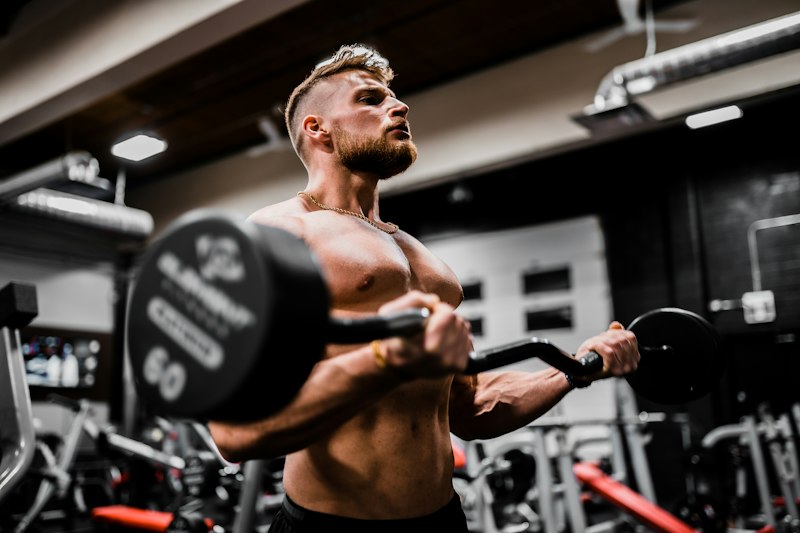
The fundamentals of how to build muscle for beginners are simpler than the fitness industry wants you to believe. You need progressive overload, enough protein, and consistent sleep. Beginners who follow a structured resistance training program gain an average of 1–2 kg of lean muscle per month in their first 3–6 months — significantly more than experienced lifters, because the body responds most powerfully to new training stimulus [1].
This guide covers the exact sets, reps, rest, and nutrition approach that produces real results — without years of trial and error.
The 4 Core Muscle-Building Principles
Beginner Workout Program (3 Days/Week)
This full-body 3-day program is based on compound movements — exercises that recruit the most muscle mass per set. Do 3 sets of 8–12 reps per exercise. Rest 90 seconds between sets. Train Monday / Wednesday / Friday or any 3 non-consecutive days.
Expected Strength Progression (Weeks 1–12)
Beginners can expect to add ~2.5 kg to compound lifts every 1–2 weeks for the first 3 months. This "newbie gains" window is the fastest muscle-building period of your life. Source ↗
Nutrition for Muscle Growth
| Nutrient | Target | Why It Matters | Best Sources |
|---|---|---|---|
| Protein | 1.6–2.2g / kg bodyweight | Primary building block of muscle tissue | Chicken, eggs, Greek yogurt, tofu |
| Calories | TDEE + 200–300 kcal surplus | You cannot build muscle in a deficit without drugs | Whole foods first, track via app |
| Carbohydrates | 3–5g / kg bodyweight | Fuel for training; replenish muscle glycogen | Rice, oats, potatoes, fruit |
| Creatine | 3–5g / day | Most evidence-backed supplement for strength gains | Creatine monohydrate supplement |
| Sleep | 7–9 hours/night | Growth hormone is released during deep sleep phases | Consistent bedtime, dark room |
A 2017 meta-analysis of 49 studies found that protein supplementation significantly increased muscle mass gains from resistance training in both trained and untrained individuals, with diminishing returns above 1.62g/kg/day [3]. You do not need expensive supplements — whole food protein sources produce identical results.

5 Beginner Mistakes That Slow Gains
- Not tracking progressive overload. If you are lifting the same weights every week and not adding load, reps, or sets, you are not growing. Your body has no reason to build more muscle. Keep a simple log — your phone notes app is enough.
- Skipping compound movements. Bicep curls have their place, but squats, deadlifts, rows, and presses recruit 10–20× more total muscle mass per set. 80% of your training volume should be compound movements.
- Too much volume too soon. 10 sets per muscle group per week is sufficient for beginners. Many beginners see gym programs doing 20–30 sets and replicate them — this leads to overtraining and injury before any adaptation occurs.
- Not eating enough protein. The research is clear: 1.6g of protein per kg of bodyweight per day is the minimum effective dose for muscle building. Most people eating normally hit 0.7–1.0g/kg. If you are not tracking, you are almost certainly under-eating protein.
- Inconsistency over intensity. 3 mediocre sessions per week for 12 months will produce far better results than 6 intense sessions per week for 6 weeks followed by burnout. The best workout program is the one you actually stick to.
See the complete ranked list of protein sources: High Protein Foods List: 30 Best Sources Ranked by Protein Per 100g
Pair your training with the right workout type: Best Workout for Weight Loss — HIIT vs Strength vs Cardio, Ranked
Calculate your calorie surplus for muscle building: TDEE Calculator: How Many Calories Do You Need?
Track Every Rep. Build More Muscle.
NoxFit logs your workouts, tracks your progressive overload week by week, and alerts you when it's time to add weight. Free forever.
Download NoxFit Free →References
- Aaberg E. (2007). Resistance training for beginners: newbie gains and initial adaptation. National Strength and Conditioning Association. PubMed ↗
- Schoenfeld BJ & Grgic J. (2019). Effects of range of motion on muscle development. Journal of Strength and Conditioning Research. PubMed ↗
- Morton RW, et al. (2017). A systematic review and meta-analysis of protein supplementation on resistance training-induced gains in muscle mass. British Journal of Sports Medicine. PubMed ↗
- Dattilo M, et al. (2011). Sleep and muscle recovery. Medical Hypotheses, 77(2), 220–222. PubMed ↗