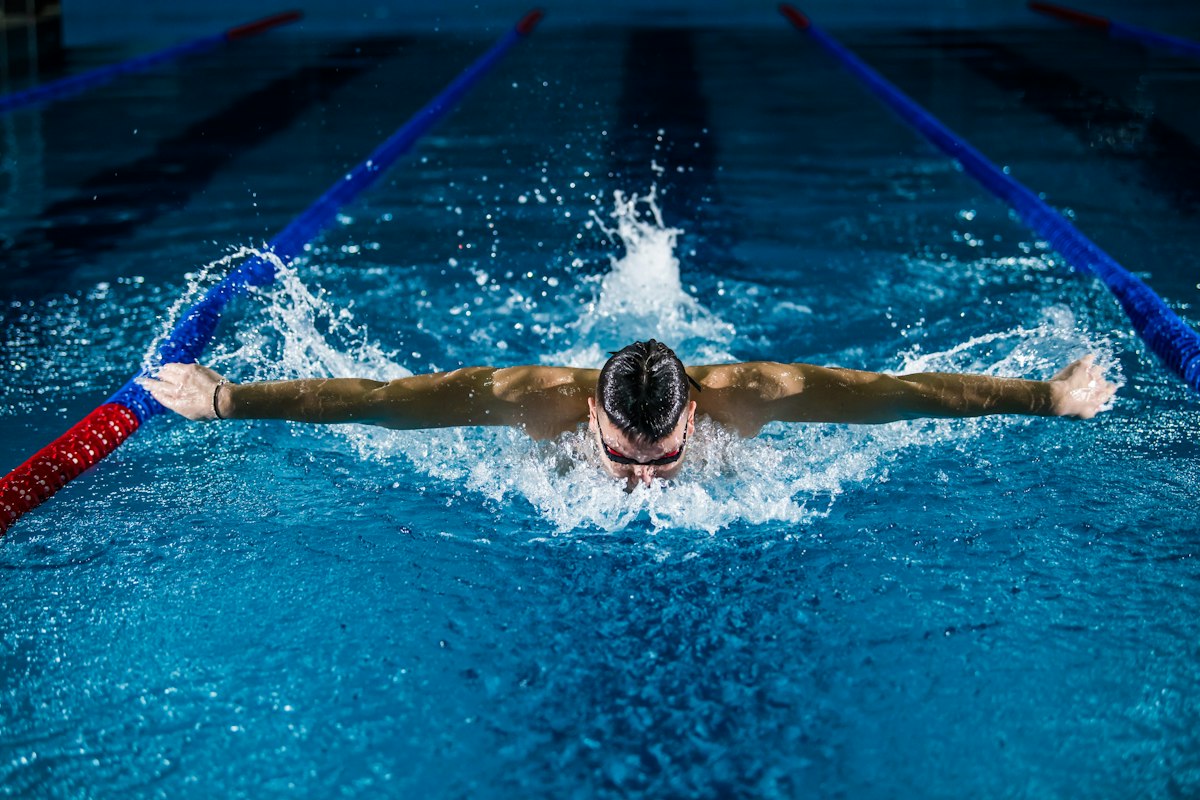
Swimming is one of the most underrated fat-burning workouts — it's low-impact, works nearly every muscle in the body, and burns a serious number of calories. But there's a nuance: it's also one of the exercises most likely to stimulate post-workout hunger. Here's the full picture on swimming for weight loss, including what the research actually shows.
Does Swimming Actually Work for Weight Loss?
Yes — swimming burns significant calories, builds lean muscle, and improves cardiovascular fitness, all of which support fat loss. A 75kg person swimming moderate freestyle burns approximately 500–600 calories per hour. That's comparable to jogging at a moderate pace.
The key caveat: swimming is notorious for increasing appetite. A 2010 study by White et al. found that swimmers consumed significantly more calories post-exercise compared to walkers who burned equivalent calories. Cold water swimming may amplify this effect due to the body's thermoregulatory response — the cooling effect of the water increases appetite hormones. This doesn't make swimming bad for weight loss; it means you need to be more intentional about post-swim nutrition than you would with other forms of exercise.
Calories Burned by Stroke and Intensity
Calorie burn varies significantly by stroke. Butterfly is the most demanding; backstroke is the most beginner-friendly. All estimates below are for a 75kg adult.
| Stroke | Moderate (kcal/hr) | Vigorous (kcal/hr) | Difficulty |
|---|---|---|---|
| Butterfly | ~650 | ~800+ | Advanced |
| Freestyle (Front Crawl) | ~550 | ~700 | Beginner–Intermediate |
| Breaststroke | ~480 | ~600 | Beginner |
| Backstroke | ~400 | ~530 | Beginner |
| Water Aerobics | ~280 | ~400 | Beginner |
Freestyle is the best all-round choice for weight loss: high calorie burn, learnable for beginners, and efficient for continuous laps. Breaststroke is ideal if you're new or have shoulder issues. Butterfly is elite territory — effective but technically demanding and exhausting even for experienced swimmers.
Swimming vs. Running for Fat Loss
| Factor | Swimming | Running |
|---|---|---|
| Calories per hour (moderate) | ~500–600 kcal | ~550–650 kcal |
| Joint impact | Zero (water supports body weight) | High (2–3× body weight per stride) |
| Post-exercise appetite | Higher (cold water effect) | Lower |
| Muscle engagement | Full body (upper + lower + core) | Primarily lower body |
| Accessibility | Requires pool access | Anywhere |
| Best for | Injuries, joint problems, variety | Maximum calorie burn convenience |
Neither is definitively better — it depends on your situation. Swimming wins for anyone with knee, hip, or ankle issues where running is painful or contraindicated. Running wins for convenience and slightly lower post-exercise hunger. Combining both gives you the benefits of each while reducing repetitive strain from either.
4-Week Beginner Swim Plan
This plan assumes you can swim basic freestyle. Each session starts with 5 minutes easy warm-up and ends with 5 minutes cool-down. Rest 60–90 seconds between sets.
Session: 4 × 50m freestyle at easy pace · 2 × 50m breaststroke · 4 × 25m freestyle faster. Total distance: ~450m. Duration: 30 min. Focus: technique and getting comfortable in the water. Don't push pace.
Session: 6 × 50m freestyle · 2 × 100m breaststroke · 4 × 25m sprint. Total distance: ~650m. Duration: 35–40 min. Focus: maintaining consistent stroke technique as distance increases.
Session: 4 × 100m freestyle at moderate pace · 2 × 100m mixed strokes · 4 × 50m sprint with 30s rest. Total distance: ~900m. Duration: 40–45 min. Focus: push pace on sprint sets, recover fully.
Session: 6 × 100m freestyle · 4 × 50m sprint · 200m easy cool-down. Total distance: ~1,000m. Duration: 45–50 min. Focus: sustaining effort. By end of week 4, this session should burn ~500 kcal.
Tips to Maximise Fat Burn in the Pool
- Eat protein within 30 minutes post-swim. A protein shake, Greek yogurt, or cottage cheese blunts the post-swim appetite spike and triggers muscle repair.
- Swim at higher intensity for shorter periods. Interval swimming (hard lap, easy lap, repeat) burns more calories than leisurely continuous laps of the same duration.
- Use a pull buoy for upper body isolation. Placing the pull buoy between your thighs eliminates kick and forces your arms, chest, and back to do all the work — intensifying upper-body calorie burn.
- Add kick sets with a kickboard. Pure leg work is highly demanding and burns significant additional calories in short bursts.
- Track your laps. Without tracking, most people lose count and underestimate distance. Use a waterproof fitness tracker or count sets consistently.
- Combine with strength training. Swimming doesn't build significant muscle mass on its own. Adding 2 strength training sessions per week alongside swimming accelerates fat loss by increasing resting metabolic rate.