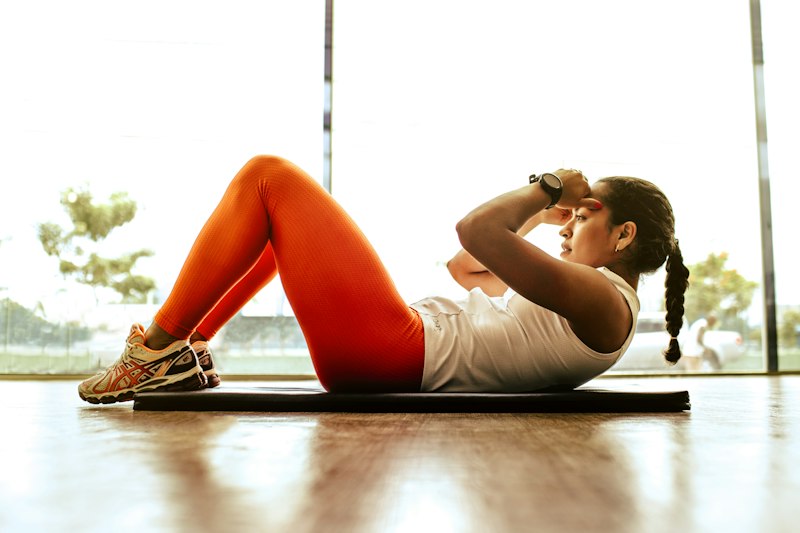
Learning how to get abs comes down to two things: lowering your body fat percentage so the abs become visible, and building the ab muscles so they're worth revealing. Most people focus entirely on exercise while ignoring the body fat side — which is why most people never see their abs despite years of crunches.
This guide covers both sides with the actual science, an exercise ranking table, and a 12-week plan that works.
The Body Fat Truth: What % Do You Need?
Abs become visible when subcutaneous fat over the abdomen is thin enough to reveal the muscle beneath. The threshold varies by individual, but research and practical experience show consistent body fat ranges [1]:
| Body Fat % | Males | Females | Ab Visibility |
|---|---|---|---|
| 6–9% | Athletic/stage lean | — | Full six-pack + striations |
| 10–12% | Lean | — | Clear six-pack visible |
| 13–15% | Fit | Athletic | Upper abs visible, lower faint |
| 16–19% | Average | Lean | Ab outline only in good light |
| 20–24% | Above average | Fit/average | Not visible |
| 25%+ | Overweight | Above average | Not visible |
Women carry 8–10% more essential fat than men due to hormonal and reproductive biology, so their abs typically become visible at higher absolute body fat percentages (18–22%) than men (10–15%) [1].
Best Ab Exercises, Ranked by EMG Activation
EMG (electromyography) studies measure how much muscle activation different exercises produce. The American Council on Exercise's landmark study [3] found that traditional crunches are among the least effective ab exercises:
| Exercise | Rectus Abdominis | Obliques | Difficulty |
|---|---|---|---|
| 🏆 Bicycle Crunch | 248% | 310% | Beginner |
| Captain's Chair Leg Raise | 212% | 310% | Intermediate |
| Ab Rollout | ~230% | ~180% | Intermediate |
| Hanging Leg Raise | ~200% | ~170% | Intermediate |
| Cable Crunch | ~185% | ~150% | Beginner |
| Plank | ~100% | ~100% | Beginner |
| Traditional Crunch | 100% (baseline) | 100% | Beginner |
| Sit-Up | ~90% | ~85% | Beginner |
% values are relative to traditional crunch = 100%. Higher = more muscle activation per rep.
12-Week Ab Training Plan
Training frequency: 2–4 times per week is optimal for ab development. The rectus abdominis recovers faster than other muscles, so higher frequency is tolerated — but abs still need 48h rest between sessions [4].
Nutrition Rules for Visible Abs
No ab workout produces visible abs without the right nutrition. The following rules are non-negotiable:
- Calorie deficit of 300–500 kcal/day. Abs become visible as body fat drops. A moderate deficit preserves muscle while losing fat — too aggressive a deficit causes muscle loss that reduces the definition you're trying to reveal.
- Protein at 1.8–2.4g/kg/day. Higher protein during a cut preserves muscle mass and supports the muscle-building stimulus from ab training. Aim for a protein source at every meal.
- Eliminate alcohol. Alcohol is metabolised before fat, effectively pausing fat burning for hours after consumption. It also increases cortisol, which specifically drives visceral fat accumulation around the abdomen.
- Minimise processed sugar and refined carbs. These cause blood sugar spikes that drive insulin release and fat storage. Replace with whole grains, vegetables, and legumes — same carb category, completely different metabolic effect.
- Prioritise sleep (7–9 hours). Sleep deprivation elevates cortisol and ghrelin, increasing abdominal fat deposition and appetite by up to 24% [5].
Body Fat Reduction Timeline
Starting point varies by individual. Timeline assumes 500 kcal/day deficit, 0.5 kg/week fat loss, with resistance training to preserve muscle mass. Genetics affect where fat is lost first.
To lose belly fat specifically: How to Lose Belly Fat: 8 Evidence-Based Strategies
Calculate your calorie deficit to reveal your abs: Calorie Deficit for Weight Loss — Free Calculator
Full body training plan to complement your ab work: Best Workout for Weight Loss: What the Science Says
Track Your Body Fat Journey
NoxFit tracks your calorie deficit and protein daily — the two levers that determine when your abs show. Free forever.
Download NoxFit Free →References
- Gallagher D, et al. (2000). Healthy percentage body fat ranges. American Journal of Clinical Nutrition, 72(3), 694–701. PubMed ↗
- Vispute SS, et al. (2011). The effect of abdominal exercise on abdominal fat. Journal of Strength and Conditioning Research. PubMed ↗
- American Council on Exercise. (2001). ACE-sponsored research: Best and worst ab exercises. acefitness.org.
- Schoenfeld BJ. (2010). The mechanisms of muscle hypertrophy. Journal of Strength and Conditioning Research. PubMed ↗
- Taheri S, et al. (2004). Short sleep duration is associated with reduced leptin, elevated ghrelin, and increased BMI. PLoS Medicine. PubMed ↗