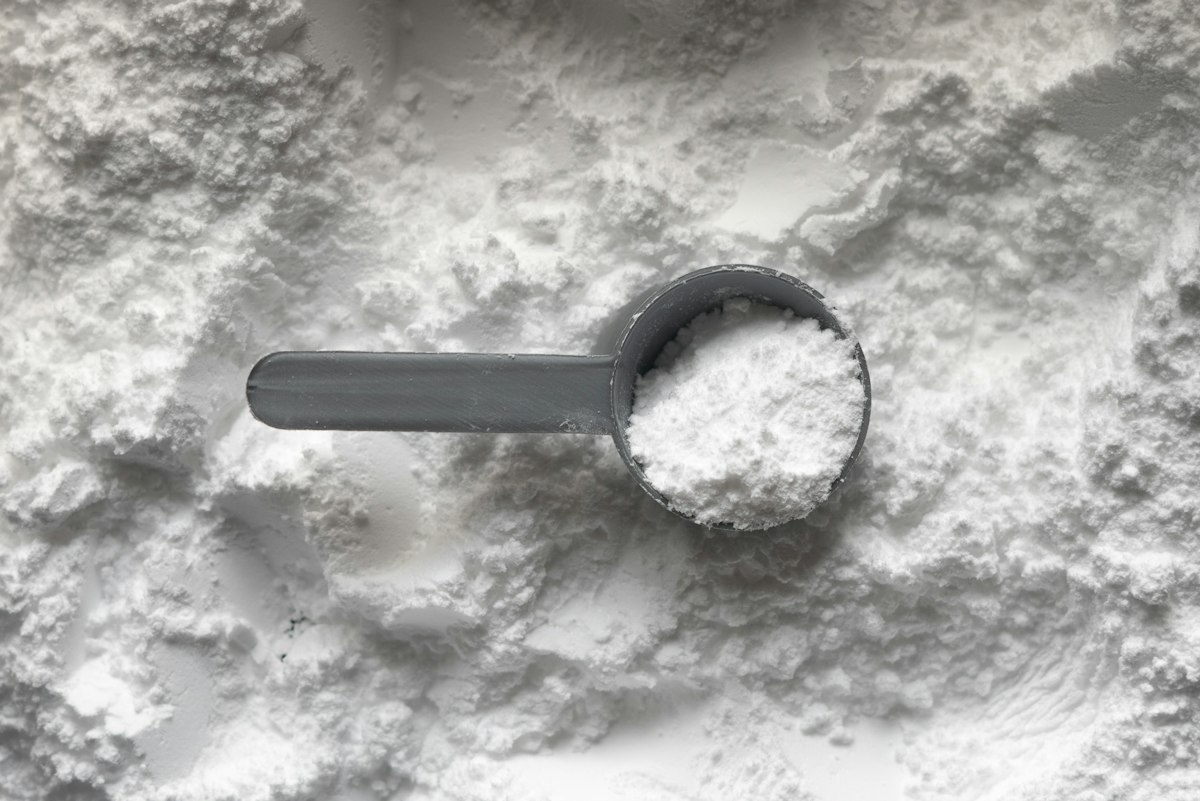
What Is Creatine?
Creatine is a naturally occurring compound found in meat and fish, and produced by your liver and kidneys. It's stored in muscles as phosphocreatine and used to rapidly regenerate ATP — your cells' primary energy currency — during short, intense bursts of effort like lifting, sprinting, or jumping.
It's the most researched sports supplement in history with over 500 clinical studies. The International Society of Sports Nutrition calls it "the most effective ergogenic nutritional supplement currently available." It is not a steroid, not a stimulant, and has an excellent long-term safety record.
Creatine and the Scale: The Water Weight Issue
Here's what confuses most people: creatine causes water retention inside muscle cells. When you start taking it, your muscles absorb extra water alongside the creatine. This typically adds 1–2kg to the scale in the first week — which looks like weight gain but is not fat gain.
If you're cutting and tracking scale weight, this initial jump can be disheartening. The solution: don't panic, and give it 2–3 weeks. The intracellular water stabilizes and your fat loss progress becomes visible again beneath it.
Does Creatine Directly Help Fat Loss?
No — creatine has no direct fat-burning mechanism. It does not increase metabolism, suppress appetite, or increase fat oxidation. Anyone claiming creatine is a "fat burner" is either misinformed or selling something.
❌ What creatine does NOT do for fat loss
Does not burn fat directly · Does not suppress appetite · Does not boost metabolism at rest · Does not change hormone levels in a way that aids fat loss
However — and this is the important part — creatine indirectly supports fat loss through several pathways:
✅ What creatine DOES do that helps body composition
Increases strength output → better workouts → more calorie burn · Preserves muscle mass in a deficit → maintains resting metabolism · Allows higher training volume → greater muscle retention · May improve glucose uptake → better insulin sensitivity
Creatine for Muscle Preservation on a Cut
This is where creatine truly earns its place during weight loss. When you're in a calorie deficit, your body has a tendency to break down muscle alongside fat — especially if your protein intake is low or your training volume drops.
Creatine directly counteracts this. A 2003 meta-analysis (Rawson & Volek) found creatine supplementation during resistance training in a deficit significantly preserved lean mass compared to placebo. More muscle preserved = higher resting metabolism = faster fat loss rate over time.
The practical implication: if you're cutting and strength training, creatine helps you keep the muscle you've worked hard to build. This makes the composition of what you lose (fat vs muscle) significantly better.
How to Take Creatine
| Method | Protocol | Notes |
|---|---|---|
| Standard (recommended) | 5g/day, every day, no loading | Reaches full saturation in ~28 days. Simplest and most sustainable. |
| Loading phase | 20g/day for 5–7 days, then 5g/day | Saturates muscles faster but causes more water weight initially. Not necessary. |
| Timing | Post-workout is slightly optimal, but anytime works | Consistency matters more than timing. Take it whenever you'll remember. |
| Type | Creatine monohydrate only | No other form (HCL, buffered, etc.) has been shown superior. Monohydrate is cheapest and best-evidenced. |
| With food? | With carbs + protein post-workout is optimal | Insulin spike from carbs may enhance creatine uptake slightly. |